
Online Learning Is Better When Built for Connection
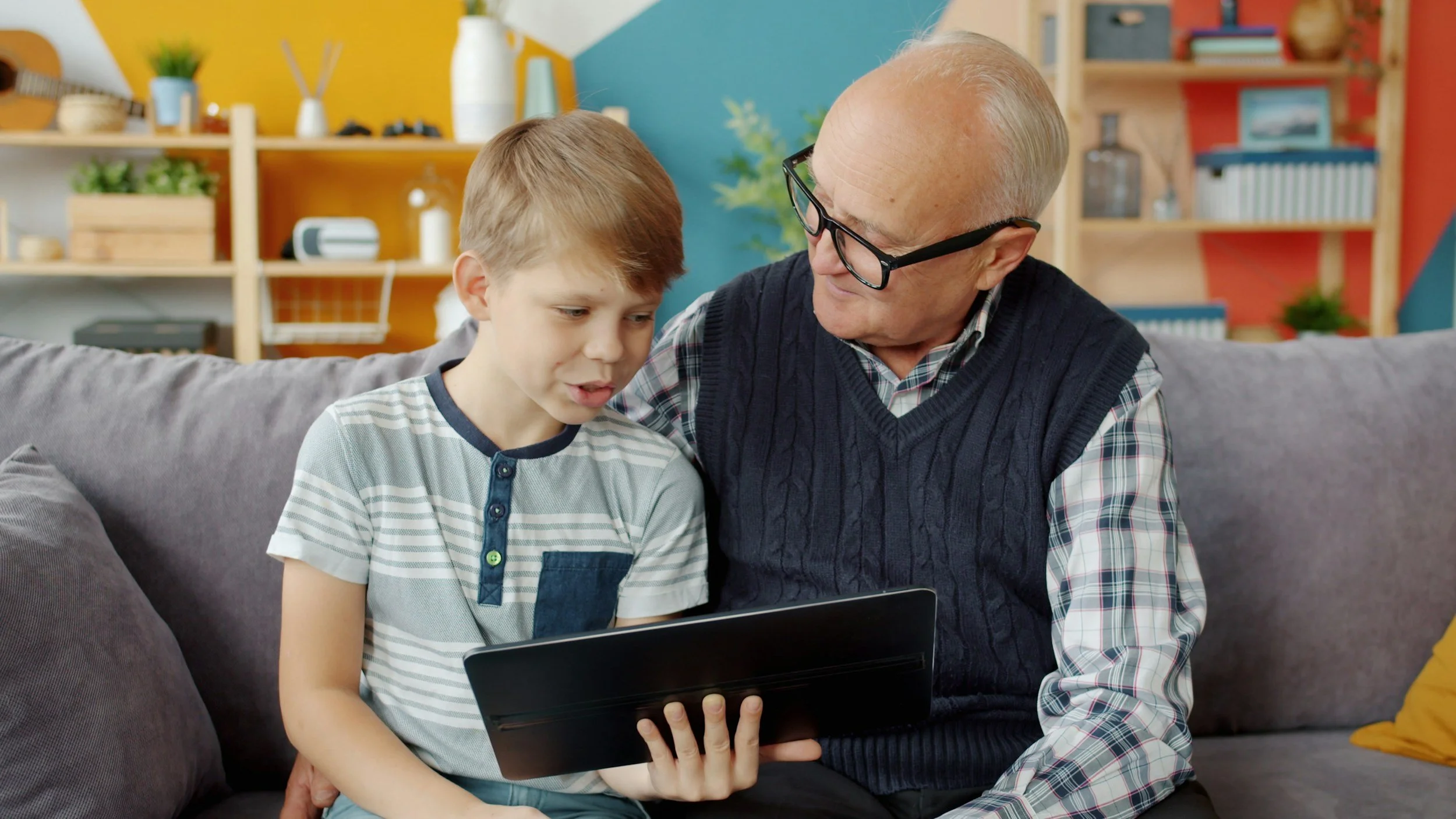
Photo by Vitaly Gariev on Unsplash
Online learning opens up what’s possible for learners of all ages and backgrounds, and every September 15 we celebrate that with National Online Learning Day. For young children, the best version of online learning is never on their own with a screen; it’s a child and an adult together, guided by the screen to problem-solve as a team.
Child development expert and author Kirsty Nolan sat down with ThinkPlayful's Director of Education Margo Smith to talk about what attachment science actually says about kids and screens.
Learning happens in relationship, and that’s how we all learn best. For the youngest developing brains, the back-and-forth between infants and caregivers is known as serve and return, a cycle of interaction that builds the brain’s architecture. As children grow, they watch those around them, and learn from example whether curiosity is safe, whether not knowing is okay, and whether trying something hard and failing is how we improve and actually learn.
Child development expert Kirsty Nolan put it simply: start with what children actually need developmentally and relationally, not just what the technology can do.
“A lot of things out there are focused on the developmental piece, but it’s still isolating children,” she said. “Finding a way to really keep and maintain the connection ... that’s what matters.”
Our ThinkPlayful team members bring experiences as educators, parents, grandparents, and learners to our research, design and development work. And we seek out people with backgrounds and perspectives different from ours to design along with us (including kids!).
Resources
CAST (formerly Center for Applied Special Technology) has a recent blog on screen time, accessibility, and student outcomes with a useful framework and resources for schools evaluating tech for online learning.
A much-needed conversation is starting to be heard around what online learning should be used for and how its success should be measured. Families’ and educators’ opinions about what success looks like should be valued more than current measures that instead value more and more time in front of a screen.
Thank you to everyone who has been part of our work so far. We are looking forward to more voices in the conversation.